Yandex Market will keep successful API request bodies for just six hours: how to retain evidence
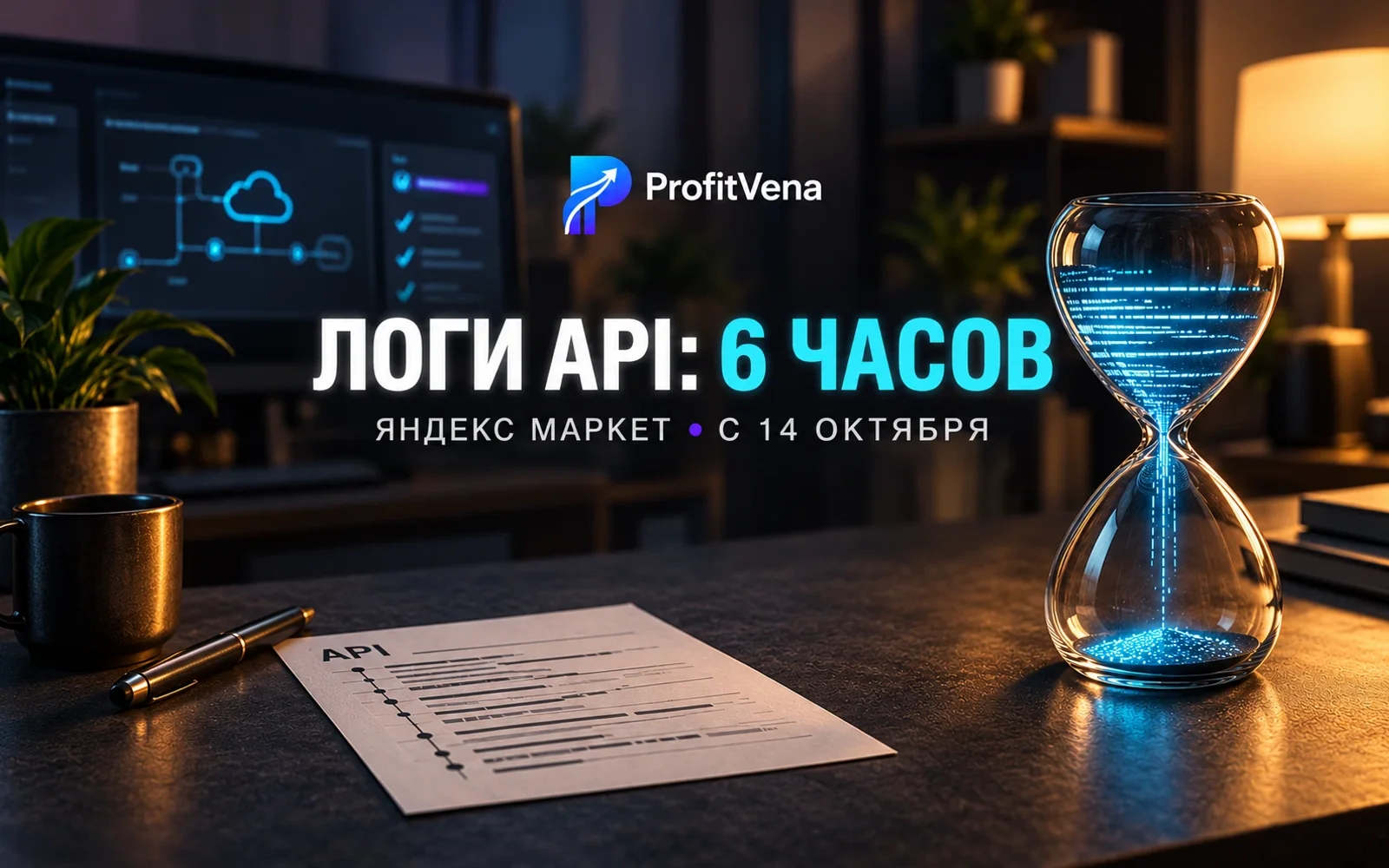
A team discovers an order discrepancy on Tuesday, but the import ran on Monday. The API log used to help reconstruct precisely what the marketplace returned. From October 14, 2026, that investigation window will be six hours for requests with response code 200.
According to Yandex Market’s official notice, full operation logs are currently available for 10 days. After October 14, request and response bodies for successful requests returning 200 will be available for only six hours. Error history will remain available for up to 10 days. The notice specifically names code 200; do not generalize the six-hour rule to every 2xx response without further documentation.
What changes for a seller?
Sales, stock and payout reports do not disappear because API-log retention changes. What shrinks is the time available to inspect one particular exchange. A late investigation becomes harder if an integration loaded an old report version, missed a response page or processed an event twice without keeping its own diagnostic trail.
Check what your integration records today. A useful minimum is request time, method, an internal or pseudonymous account identifier, response code, request or correlation ID, page or report ID, record count and importer version. For financial discrepancies, retain the source report reference and reporting period.
Saving every complete request and response indefinitely is not a good default. Bodies may contain personal data, business-sensitive details or secrets. If detailed copies are genuinely necessary, limit access, retention and captured fields; remove tokens; and assign an owner for the diagnostic store.
Checklist before October 14
- Find out where the team currently looks for exchange history: Yandex’s seller interface, its own logs or nowhere.
- Capture diagnostic metadata when the API call happens. The response body may no longer be available from the seller interface the next day.
- Link each log entry to a specific import and accounting period. Label retries and partially loaded pages separately.
- Monitor completeness. A missing response must never silently become “zero orders” or “zero revenue.”
- Rehearse an investigation one day after an import. If the team cannot explain what happened, add the missing identifier or source snapshot.
For example, when an order total differs from an internal summary, start with the snapshot time, source version and row count. Then locate the request ID and confirm whether pagination finished. A single number cannot explain a discrepancy without its source and period.
Our SKU payout reconciliation guide helps separate ingestion problems from differences in accounting for sales, deductions and product cost.
Where ProfitVena fits
Marketplace analytics need data provenance, the time of the last successful import and an honest status for incomplete data. These are principles guiding ProfitVena; access to Yandex Market data depends on the connected source and configuration. Shorter API-log retention does not mean ProfitVena automatically stores complete request bodies or can reconstruct them later. ProfitVena is part of the Wicsora ecosystem.
Verified October 6, 2026. Source: official Yandex Market API notice. Check the current Yandex Market documentation for diagnostic procedures.