
A product can have a positive margin on each sale yet remain in storage longer than planned. Storage and related warehouse charges may change the result. A single total deduction is not enough: match the charge to the period, products, and stock.
Build a traceable dataset
Choose one warehouse, one period, and a list of SKUs. For each SKU, keep opening and closing stock, sales, receipts, and known warehouse charges. Record the source and refresh date of every figure. Marketplaces label and charge these services differently, so use the current reports and terms for your own seller account.
Separate direct and shared costs
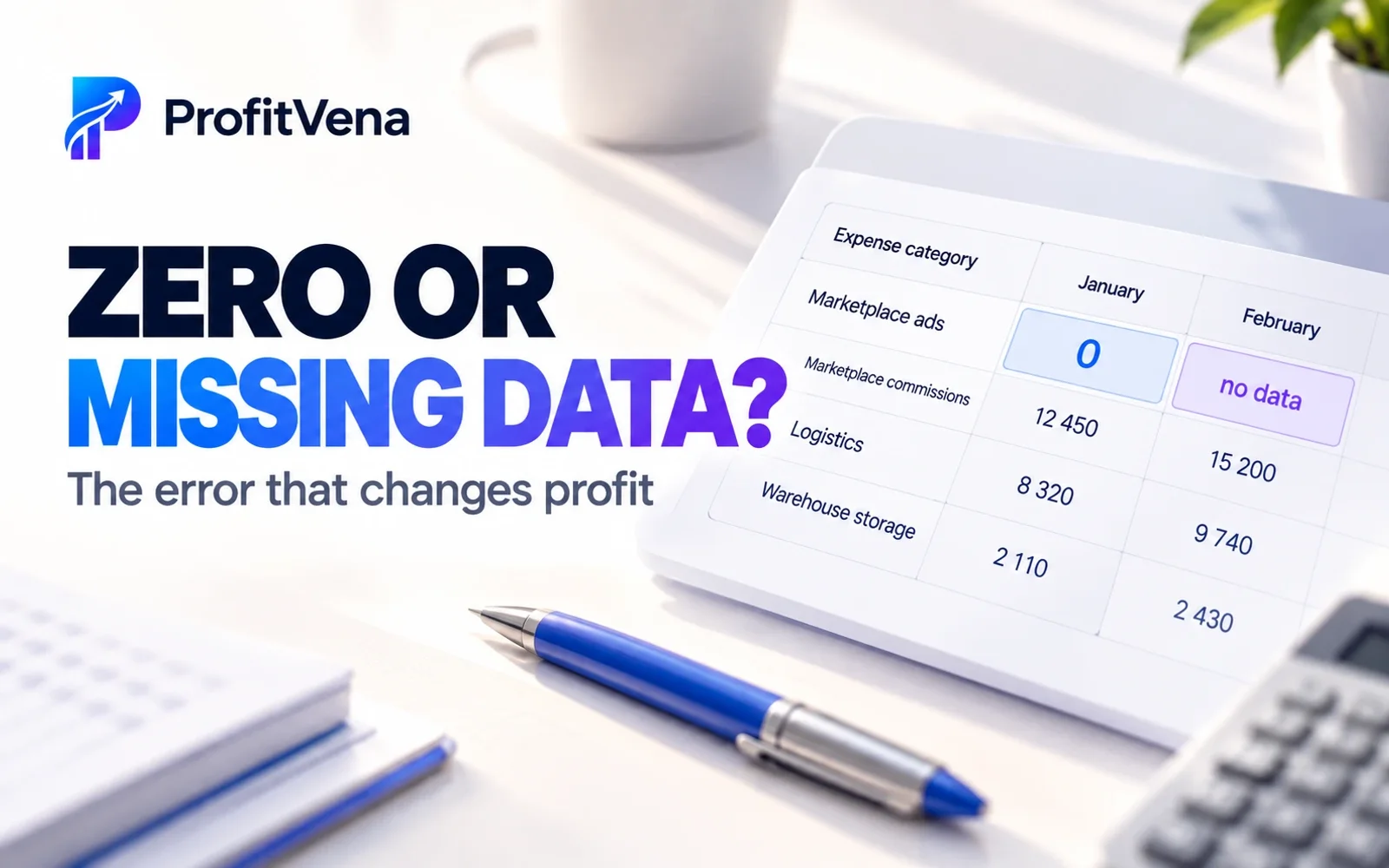
Assign a charge directly when its report line clearly identifies the SKU. Allocate a shared charge only under a documented rule, such as unit count, volume, or share of average stock. The rule affects the result. Show the method and any unallocated amount beside the calculated profit. Missing data is not a zero cost.
For an illustrative example, a product leaves ₽240 per sale before warehouse costs. Forty sales produce ₽9,600 of provisional margin. If ₽2,400 of warehouse costs can reasonably be assigned to that SKU, ₽7,200 remains, or ₽180 per sold unit. These are teaching figures, not a marketplace tariff or a seller result. If the ₽2,400 belongs to the whole warehouse and no allocation rule has been agreed, ₽180 is not a precise SKU profit figure.
Make the decision after three checks
- Check whether the period is closed. Late charges can arrive after the sales.
- Compare sales velocity with days of stock. Slow-moving inventory ties up cash and may accumulate storage costs.
- Model options: reduce the next replenishment, change the price, or move stock. Include the cost of the action itself.
For the capital side, see how to assess cash tied up in stock. Also review cost per buyout after advertising: advertising and warehouse charges need a clear classification before combining them.
ProfitVena helps combine available Wildberries data and supported Excel/CSV imports to review SKU economics, costs, and source quality. Completeness depends on exported warehouse charges, product mapping, and the chosen allocation rule. The technical part has been updated in ProfitVena. ProfitVena is part of the Wicsora ecosystem.